Parliamentary debate on Israel risks normalising conspiracy theories | A guide for MPs and advocates
Ahead of today's Westminster Hall debate, Our Fight has submitted the following comprehensive briefing to Members of Parliament. Our Fight Director Mark Birbeck notes that the debate is another test of whether our public institutions can recognise and reject classic conspiracy frameworks.
DOCUMENT: BRIEFING FOR MEMBERS OF PARLIAMENT
DEBATE: E-petition 752646: Call a public inquiry into pro-Israel influence on politics & democracy
DATE OF DEBATE: Monday 22 June 2026
FROM: Our Fight
Executive summary
On Monday 22 June, the UK Parliament will debate a petition concerning Israeli 'influence' in British politics. Although some organisations had asked for the petition to be rejected, reaching the 100,000-signature threshold means that this debate is procedurally mandated.
If Members treat this debate as a good-faith enquiry into lobbying, Parliament risks normalising and amplifying a persistent anti-Semitic narrative: the claim that a hidden hand controls world events. This briefing documents how the petition mirrors historical patterns of conspiracy thinking and outlines why it is crucial that MPs attend to actively challenge, rather than passively permit, this rhetoric.
Structural breakdown of the petition text
The petition reads:
We are concerned about reported Israeli state-linked and pro-Israel lobbying activity in UK politics. We believe it is important to determine the scope and impact of any such influence campaigns.
We feel that the horrific devastation in Gaza, the ongoing suppression of Palestinians in the West Bank, and the UK’s political response underline the urgent need to scrutinise how pro-Israel organisations, networks, and lobbying efforts may shape government decisions, party policy, and public debate.
While claiming to be concerned with political transparency the petition actually relies on a logical sleight of hand designed to pathologise ordinary political disagreement:
- The premise: It asserts highly contested geopolitical claims as absolute facts.
- The observation: It notes that the UK Government's foreign policy does not concede to these assertions.
- The conspiracy conclusion: It concludes that since the government does not concede, it must be under hidden foreign control.
Many nation states engage in legitimate diplomatic and advocacy efforts within Westminster, but by focusing on Israel and framing a policy disagreement as a symptom of subversion, the petition crosses into conspiracy thinking.
Historical parallel: The Protocols framework
The conspiracy logic embedded in this petition—that a Jewish state uniquely controls Western politics—dates back to the turn of the 20th century.
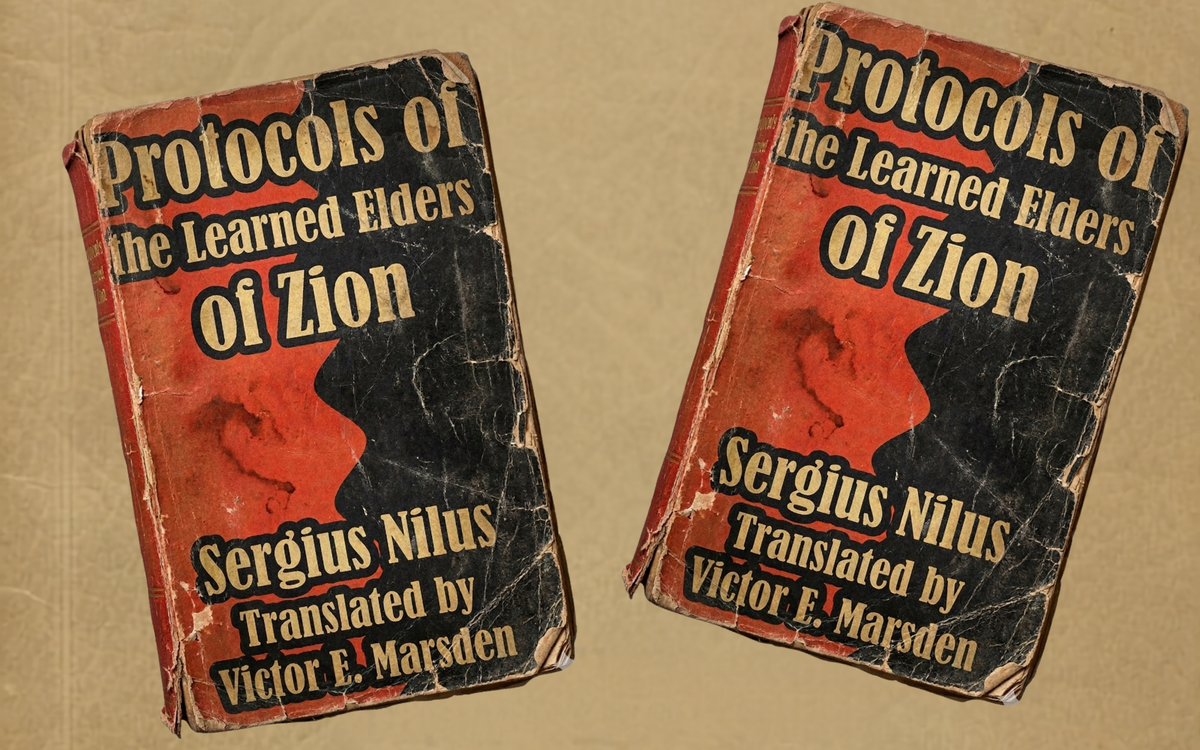
- The forgery: The Protocols of the Elders of Zion (first published in Russia in 1903) was a thoroughly exposed plagiarism designed to blame societal problems on a secret Jewish plot.
- The legacy: Despite being proven a fake by the 1920s, it formed the ideological bedrock of the Nazi regime's propaganda and was later explicitly integrated into the foundational 1988 Hamas Charter.
- The modern variant: The structural pattern of The Protocols relies on identical, recurring themes—dual loyalty, media manipulation, and total societal penetration. The contemporary petition does not adapt the framework; it simply maps these exact same, century-old themes onto modern institutions, stripping state decisions of good faith and attributing them entirely to an 'invisible hand'.
The threat of institutional amplification
The danger of today's debate lies in the potential for institutional normalisation. When civic institutions treat conspiracy frameworks as standard matters of business, they give them unearned credibility.
We saw an example of this systemic vulnerability during last year's West Midlands Police scandal regarding the ban on Maccabi Tel Aviv supporters. The subsequent Home Affairs Committee inquiry and the HMIC report revealed that police leadership fell victim to 'confirmation bias', failing to execute basic due diligence and acted on external pressures and flawed AI-generated misinformation—all of which combined to treat Jewish football fans as a unique threat.
When public bodies act on or validate biased frameworks without rigorous pushback, prejudice is slowly institutionalised. Today, Parliament faces the exact same test.
Parliamentary committee questions are put to the police chief over the controversial fan ban.
Direct guidance for members attending the debate
Do not boycott—attend and expose
We strongly urge good-faith MPs from all parties to fill the benches in Westminster Hall. A vacant room allows unchallenged rhetoric to enter the parliamentary record. Use your time on the floor to dismantle the petition's circular logic.
Demand clear government language
The government's procedural response ('We have existing lobbying registers') is insufficient. Request that responding Ministers state clearly that while lobbying transparency is a universal standard, Parliament will not validate conspiracy theories that pathologise normal diplomatic and political processes.
Highlight anti-Semitic tropes
Remind the House that framing Israeli advocacy as a uniquely insidious, hidden threat that subverts British democracy falls squarely within modern conceptualisations of anti-Semitism.
Parliamentary momentum
David Taylor MP (Labour, Hemel Hempstead) has already confirmed his intention to attend the debate. Our Fight urges other Members to follow this lead, attend the session, and ensure the petition is robustly challenged on the official parliamentary record (Hansard).
About Our Fight
Our Fight was established to convince non-Jews of the need to take a public stand against anti-Semitism.
Since it was founded in the weeks after the pogroms of 7 October 2023, Our Fight has carried out an enormous number of activities: for last year's Yom HaShoah it took a delegation of mainly non-Jews to Israel; for Holocaust Memorial Day it commemorated with street exhibitions, vigils, and a public event which included Brendan O'Neill and Jonathan Sacerdoti; for last year's 7 October anniversary, it organised an event and exhibition with Allison Pearson and Emily Schrader.
Alongside these events, director Mark Birbeck and his team have led anti-boycott activities outside Israeli restaurant Miznon, Aston Villa FC, Hackney Town Hall and Gail's bakery as well as weekly counter-protests against anti-Israel activities in locations from London to Bristol, Brighton to Frankfurt.