The Green Party Has An Anti-Semitism Problem
Russell Collins writes that a recent Green Party campaign rally in Islington should have been routine; a rousing speech from leader Zack Polanski, and then off to knock on doors. Instead, it turned into an awkward confrontation that exposed the growing problem of Jew hatred inside the party.
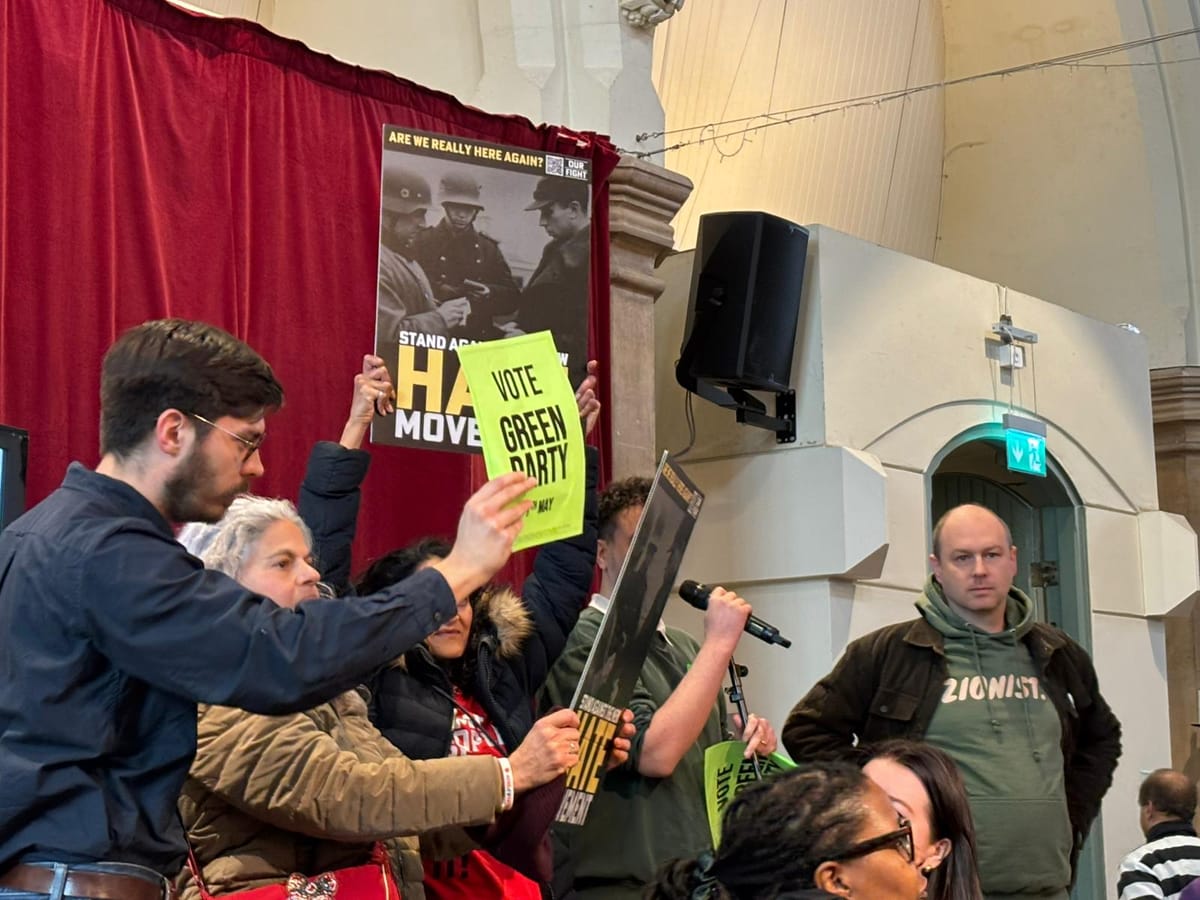
A recent Green Party campaign rally in Islington was supposed to be routine; in the wake of their by-election victory in Gorton and Denton, activists were to gather, hear a rousing speech from leader Zack Polanski, and then head out to knock on doors. Instead, it turned into an awkward confrontation that exposed the growing problem of Jew hatred inside the party.
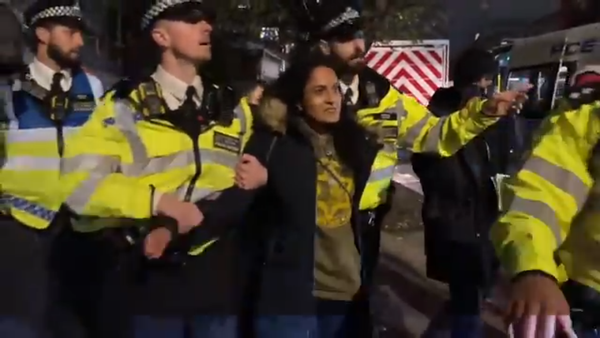
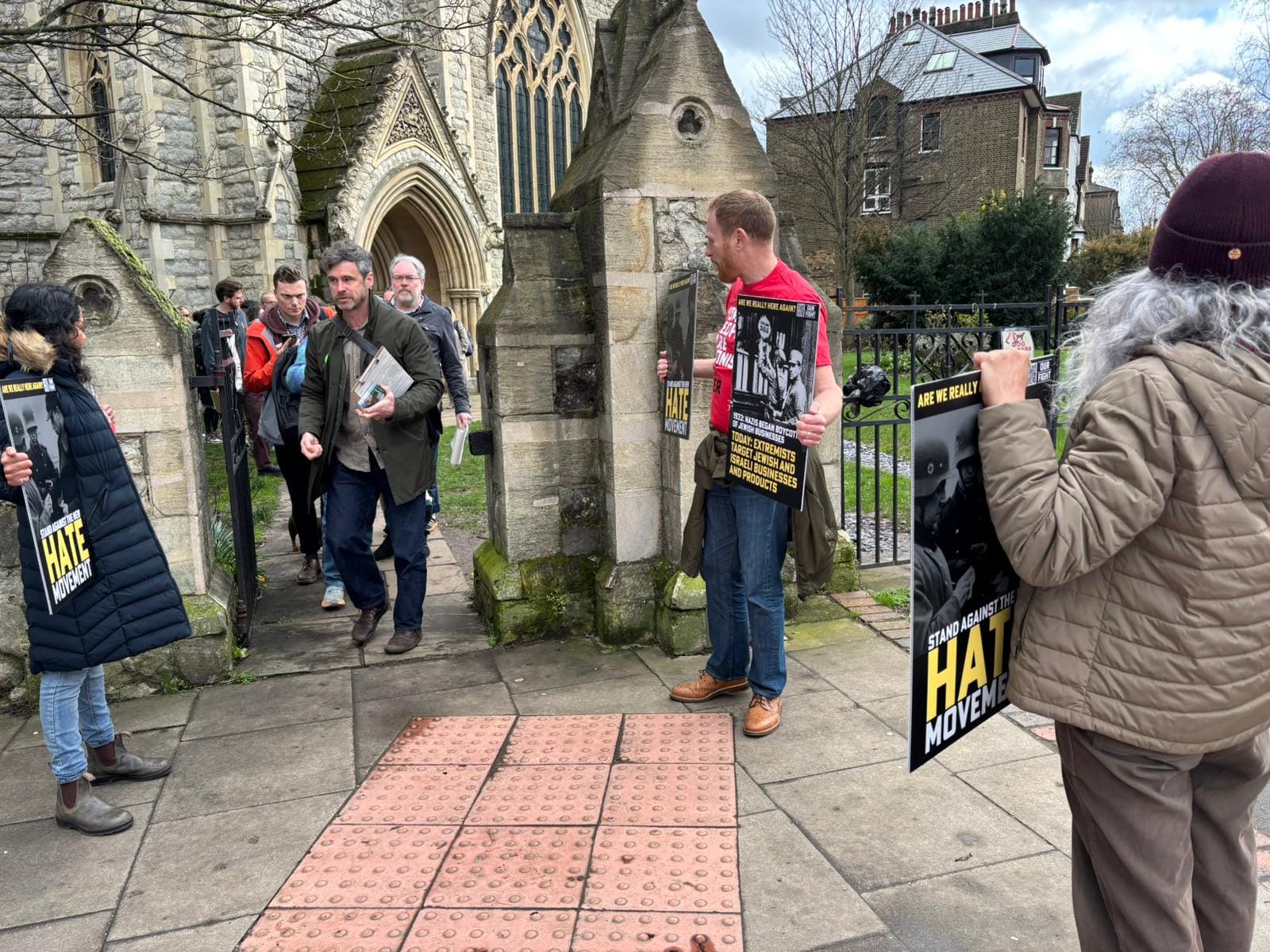
As Zack Polanski stepped forward to address the room, several Our Fight activists entered holding placards about rising anti-Jewish hatred in Britain.
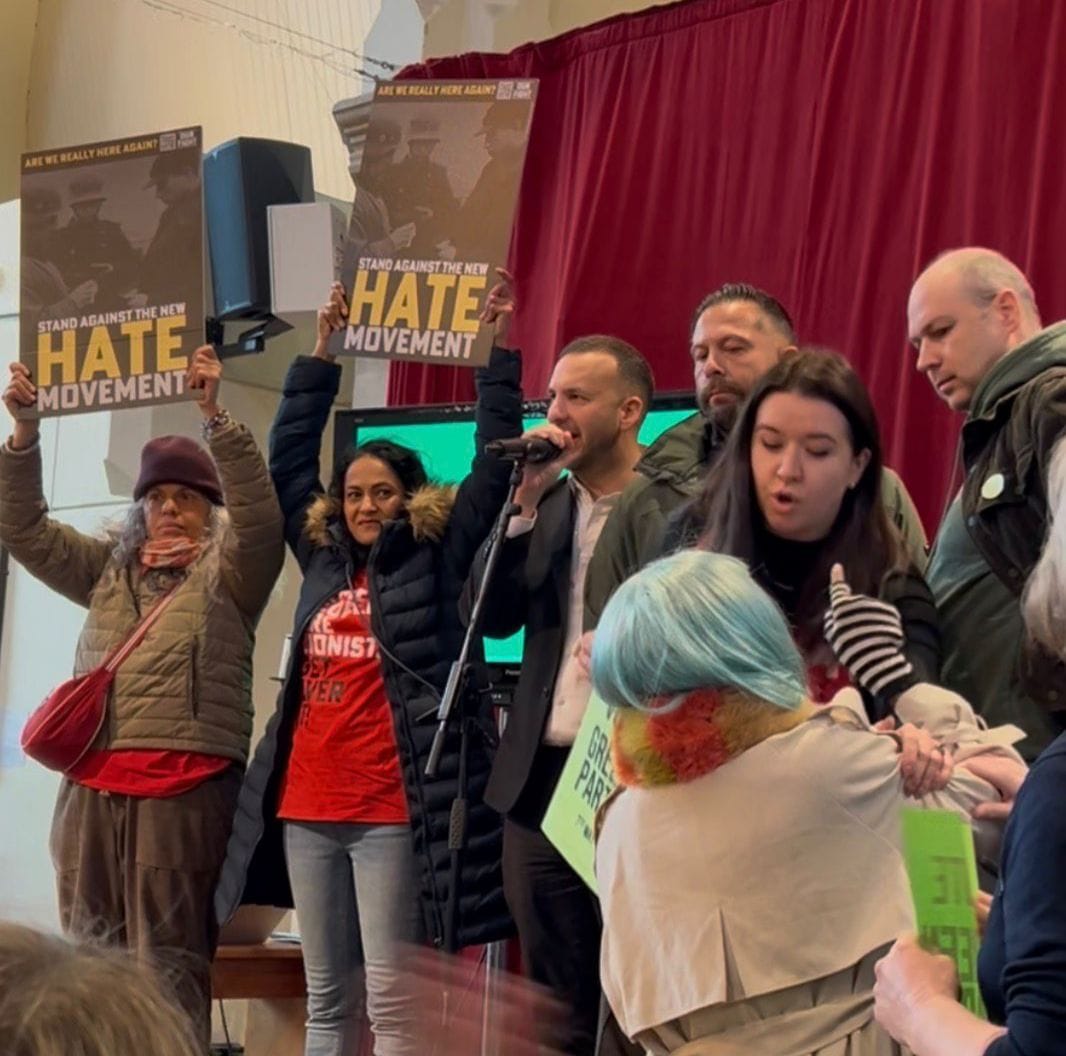
One of them, Russell Collins, stepped forward with a question: Was Polanski comfortable with the Green Party's proposal (Motion A105) to label Zionism as racism, which would effectively libel the Jewish community as racists? Was he happy for the Green Party to align itself with an ideology that incites hostility toward Jews?
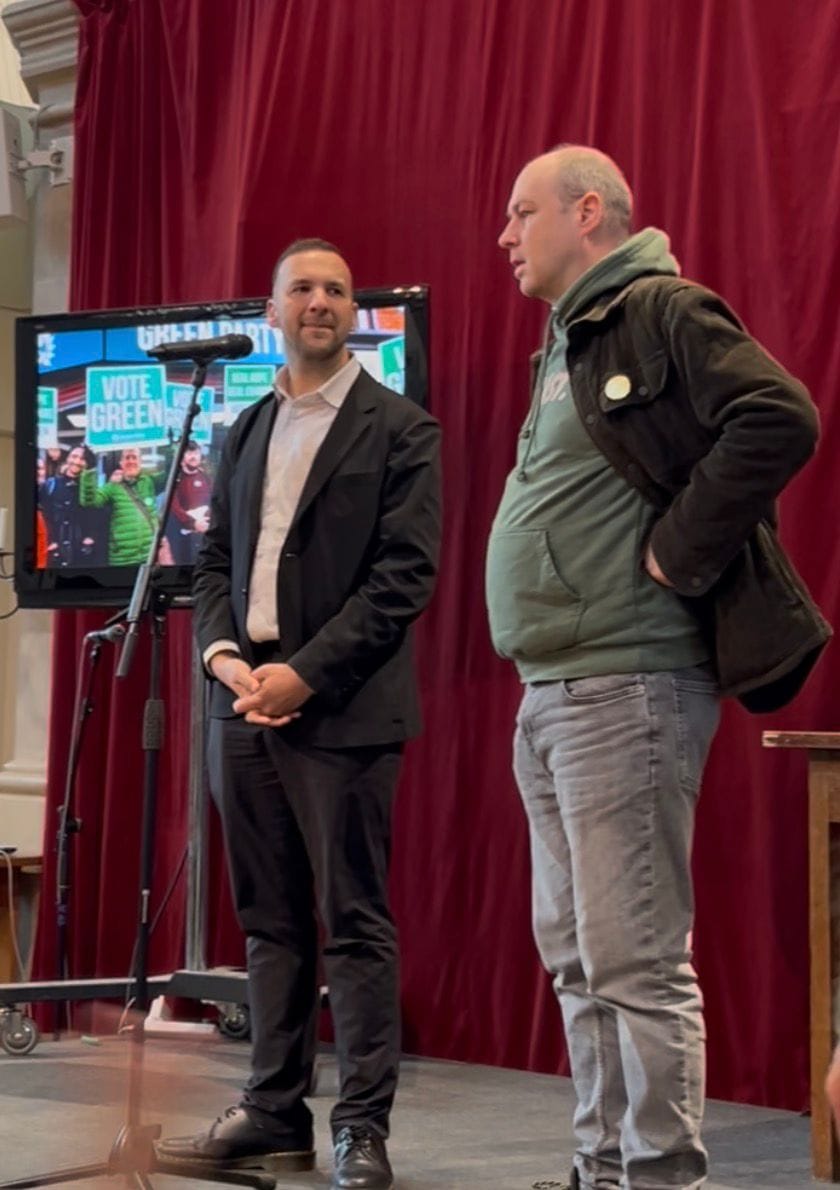
Motion A105
Motion A105 will be discussed at the Green Party spring conference on March 28th, and proposes the formal adoption of the idea that Zionism is racist.
This may sound like a statement about Middle Eastern politics but for Britain’s Jewish community the implications are immediate and personal. Most British Jews consider themselves Zionists in the basic sense that they support Israel’s right to exist. And most will maintain strong family, religious and cultural ties to the world's only Jewish state.
Polanski's answer was brief: “I stand with my Jewish friends and colleagues” he said, before leaving the stage.
What happened next was revealing.
Free, Free Palestine
Rather than engage with the concerns raised, many activists in the room began chanting their refrain heard constantly over the last two and a half years: “Free Palestine.”
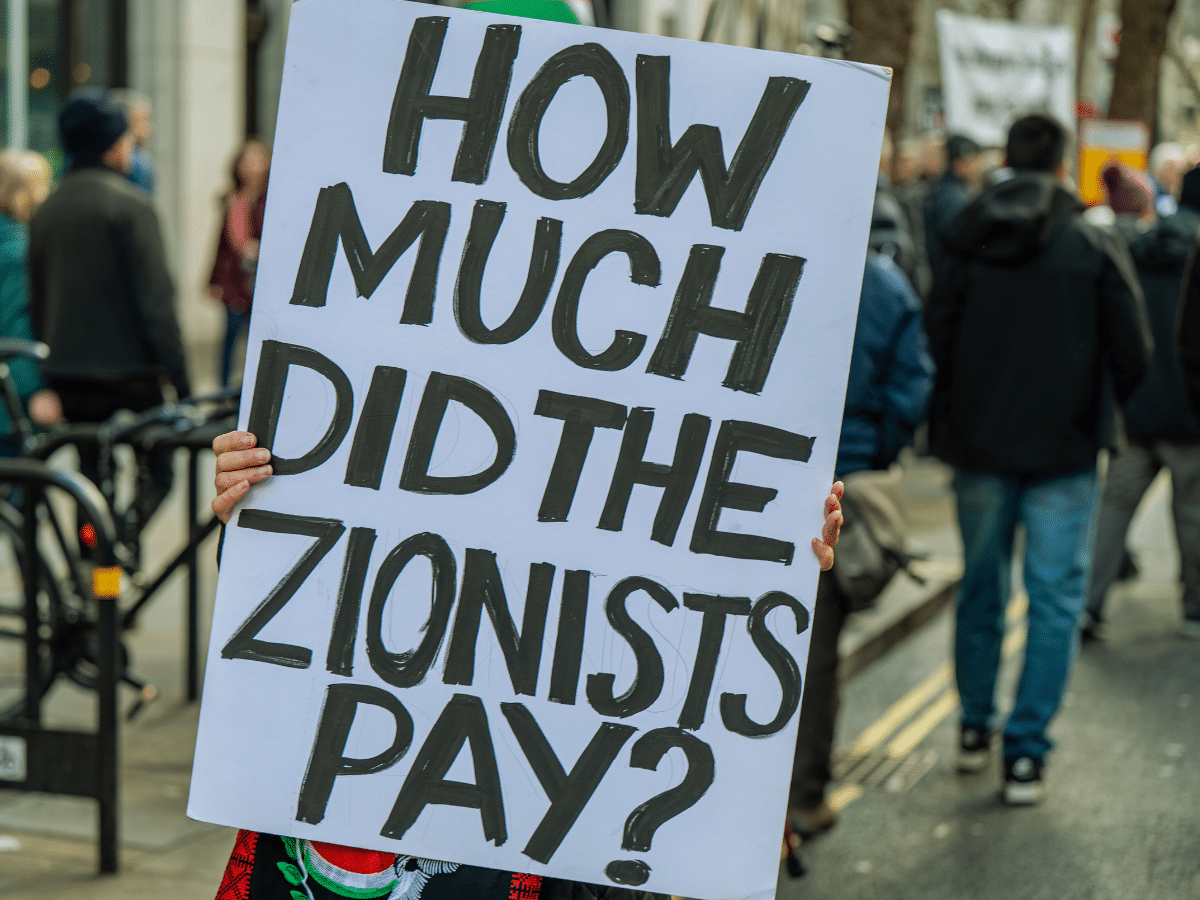
The chant was striking not because it expressed sympathy with Palestinians, but because of the context in which it was deployed. The Our Fight activists had not mentioned Israel, Gaza, or the current war. Their placards referred only to anti-Semitism in Britain. Yet the moment anti-Jewish hatred was raised, the conversation was immediately reframed as an argument about Israel.
For many Jewish observers, this reflex has become increasingly familiar: concerns about anti-Semitism are often dismissed as attempts to silence criticism of Israel, even when Israel is not the subject being discussed.
The exchange in Islington captured a deeper tension that has been building within the Green Party for some time; activists against anti-Semitism — including Our Fight — are increasingly concerned that the party has been purposefully moving toward a hard-line anti-Israel position. And this position is one that draws no distinction between legitimate criticism of Israeli policy, and hostility toward the Jewish community itself.
And at the centre of that shift stands Polanski.
Zack Polanski
Polanski has often spoken openly about his Jewish background. At eighteen he changed his surname from Paulden to Polanski in order, he said, to reclaim a Jewish heritage that earlier generations had softened by anglicising the family name.
He has also described how his views on Israel evolved over time. Having grown up in “a very Zionist household”, Polanski now describes himself as “certainly not a Zionist”.
At the same time he frequently presents himself as a voice against anti-Semitism, albeit his definition of anti-Semitism appears worryingly selective. While Polanski readily condemns far-right anti-Semitism, he has been far less willing to acknowledge the increasingly familiar phenomenon on the political left — the demonisation of Zionism and centrality of anti-Jewish tropes concerning control of governments, finance and society.
 Daniel Ben-Ami
Jews Unwelcome
That is precisely why Motion A105 has provoked alarm among Jewish members of the party itself.
The Jewish Greens — a group Polanski helped found — have warned that the motion will “make Jews feel unwelcome in the Green Party” and constitutes an “attack” on Jewish identity.
 samalston
Their warning reflects an anxiety within Britain’s Jewish community; according to the Community Security Trust’s annual Antisemitic Incidents Report, 2025 saw the second-highest number of antisemitic incidents ever recorded in the UK.
Despite those warnings — and his claims that he stands with his Jewish colleagues — Polanski has indicated he will vote for the motion.
Oblivious
The events in Islington hinted at another problem as well.
Not every Green Party member present appeared aware of Motion A105. Conversations outside the venue suggested that much of the broader membership are unfamiliar or disengaged with the proposal and its implications.
Polanski's leadership, under the cover of his Jewish identify, has been a catalyst for this radical, hard left, anti-Zionist entryism. As it rises in the polls, the fear is that the Green Party is about to become the major vehicle for justifying attacks on Jews in the UK.
Yet its members seem at best oblivious and at worst supportive.
Further Reading
 Rachel Hirshfeld
 Action Network
 Maddison Wheeldon