Are We Really Here Again?
After the intimidation of Miznon staff and customers by modern-day brownshirts, Mark Birbeck argues that non-Jews in particular must not allow boycotts to take hold. We must stand against pickets, and support any businesses that are targeted.
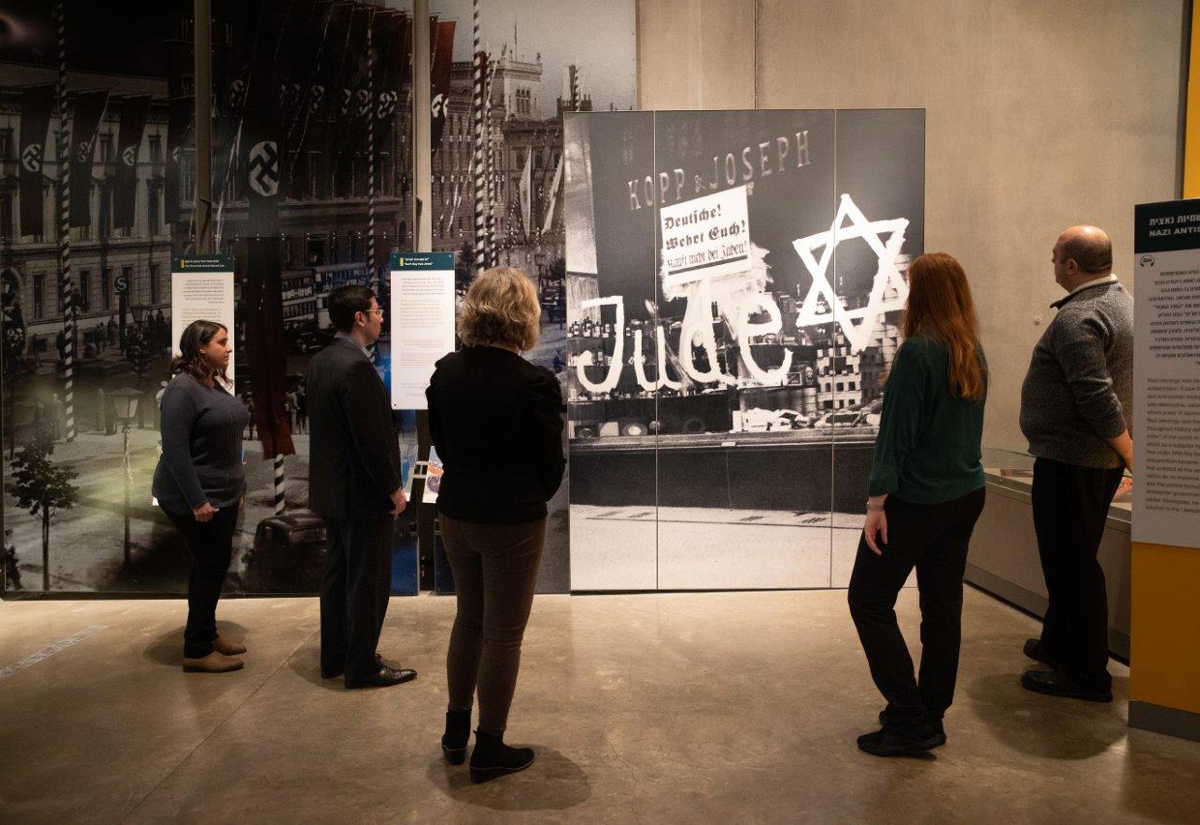
Earlier this week I made my third trip to Yad Vashem, the World Holocaust Remembrance Center in Jerusalem — a must visit, if you haven't already.
The overwhelming feeling I had as I stumbled out of the exhibition and into the sunlight was that no matter how many times you walk through its powerful exhibits, it doesn't get any easier to comprehend. Of course you can watch the grainy videos, look at the photos, read the displays, and even remember dates, numbers, and names. And you should do this as many times as you can, whether or not you are a non-Jew, like myself. But no matter how often you visit, you will still come away thinking — how could this have happened?
And perhaps that is as far as we can get; after all, as Hannah Arendt famously observed — when something so seemingly insignificant as the status of Jews in Germany sets in motion events that eventually lead to the Holocaust, it is incomprehensible...an 'outrage to common sense'.
But today, in 2026, it seems we are in danger of even forgetting to ask the question.
Miznon
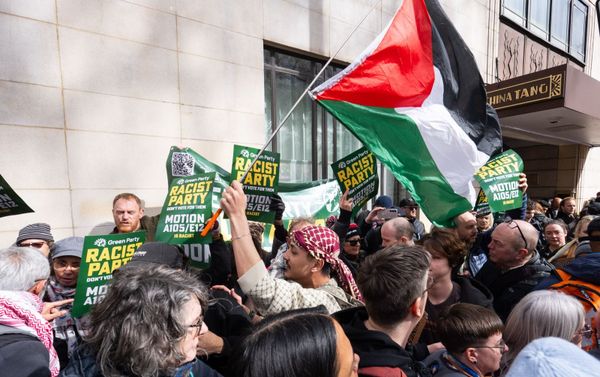
For a number of weeks now, a disturbing combination of activists from the Palestine Solidarity Campaign have decided to stand outside the Notting Hill branch of Miznon — a Jewish-owned chain of restaurants — and harass customers and staff about the situation in Gaza. They scream that the restaurant is 'not welcome' in 'their' area. They have deemed their view of the massively complex situation that engulfs Israel, Gaza and the West Bank to be the right one, and as a result, they now stand outside the restaurant on Friday evenings and shriek 'shut it down'.
At the most recent picket their numbers grew, and they supplemented their bigotry with chants in support of detained Venezuelan President Nicolás Maduro and against the shooting dead of a protestor by an immigration agent, in Minneapolis. That they can hop shamelessly from one issue to another whilst barracking a Jewish business, shows that the rest of the world serves only as a stage onto which they will project and display their virtuousness, with no care for the lives of others.
🚨 Over 50 people are at this very moment screaming "shut it down" outside a Jewish restaurant in London.
— OurFightUk (@OurFightUk) January 9, 2026
They are shrieking their bigotry in front of the Miznon restaurant in Notting Hill, intimidating customers and staff.
1930s Germany has arrived on the streets of London,… pic.twitter.com/bn6OJ9Nii3
Boycotts
But this moral grand-standing is not without consequence. Calling for Jewish businesses to be closed because they are 'not welcome' is a shocking echo of the past, one that is either unknowing — in that it is oblivious to its historic parallels — or darkly knowing — in that it sees the equivalence, but simply does not care.
Whether oblivious or not, this dangerous call for boycotts of Jewish-owned businesses is on the rise across the West.
Only this week we have seen activists try to put pressure on Celtic as they finalise the signing of a player from Israeli football club Maccabi Netanya.
 273587472675761
In Spain we saw a list of hundreds of Jewish businesses in Catalonia published on a map, with a declaration that they are 'Zionist'; and since the father and son murderers of 15 Jews on Bondi Beach claimed they were targeting 'Zionists', the map was certain to cause serious alarm amongst Spanish Jews.
 FRAIDY MOSER
In Melbourne another branch of the Miznon restuarant was attacked and smashed up during a protest that had the same premise as the one in Notting Hill on Friday — that the restaurant chain and its owners were 'not welcome'.
 Al Jazeera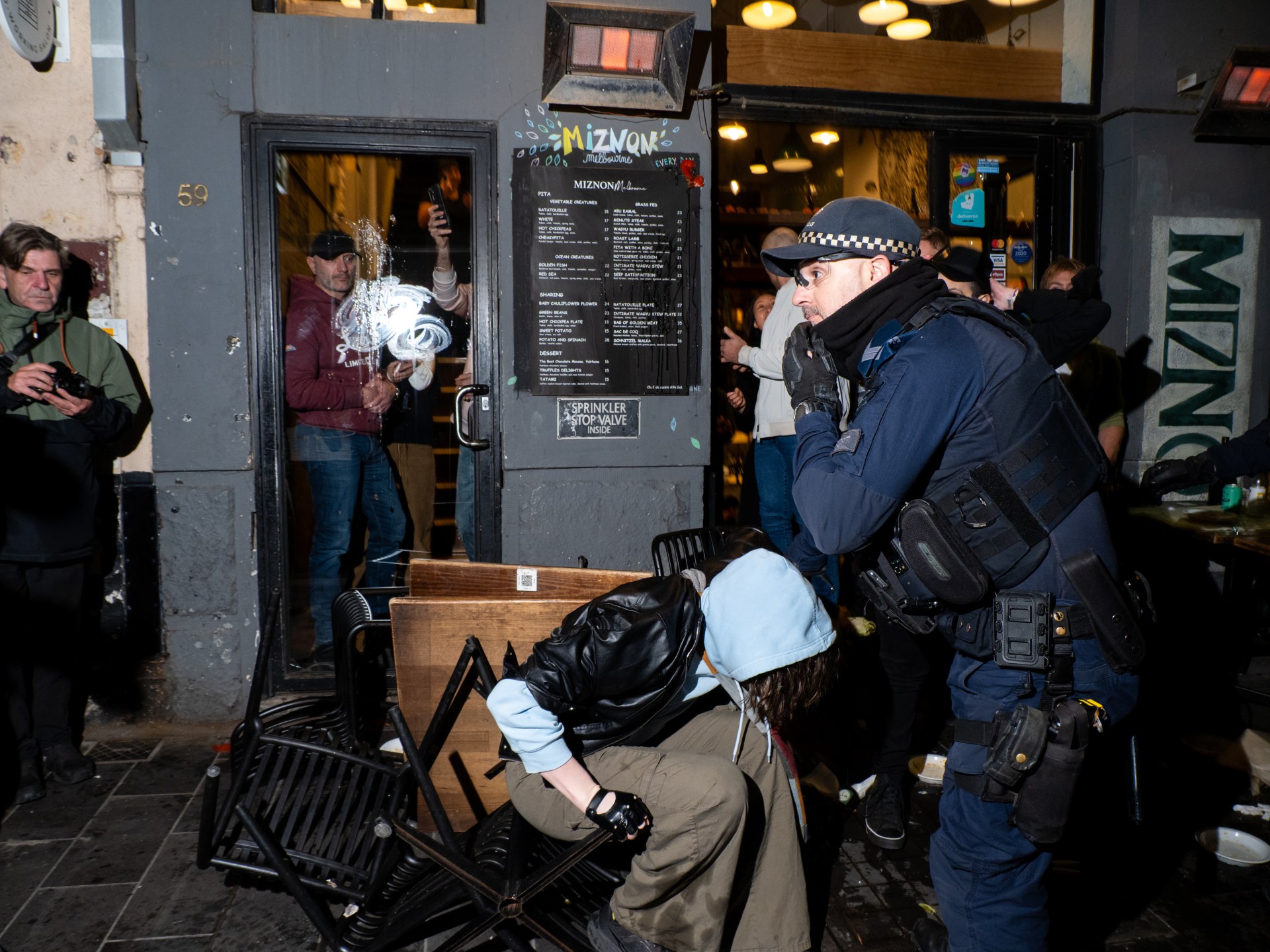
And perhaps most disturbing of all is a Melbourne bakery that is about to close, succumbing to two years of harassment — anti-Semitic harassment that continued even after 15 Jews were murdered on Bondi Beach.
So we have a sense of the answer to the question from Yad Vashem, of how could the Holocaust have happened. We have a sense because it is unfolding before us.
Boycott Day
The Nazis did not start their murder of Jews in May 1944, when they deported nearly 450,000 of them from Budapest to Auschwitz in just a few months — most of them to be gassed to death. Neither did the slaughter begin in the period in the two years before that, when 1.3 million Jews were rounded up in Poland during Operation Reinhard, to be murdered in the camps of Treblinka, Sobibor, and Belzec — some with gas, others shot by the Einsatzgruppen.
 Melissa Healy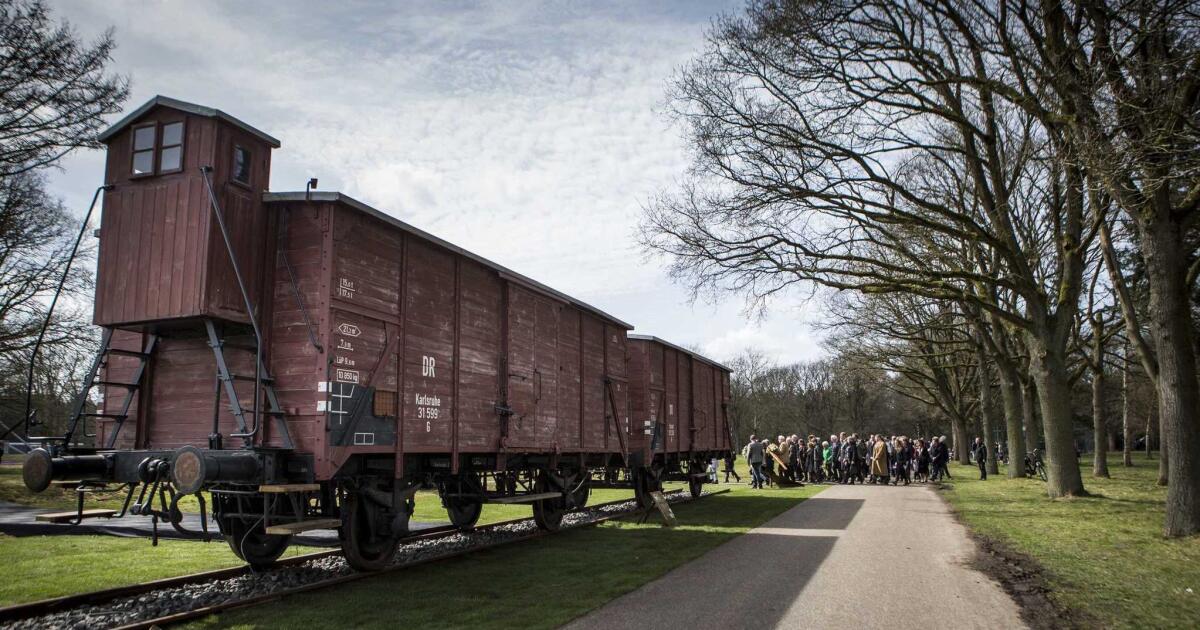
Nor is the beginning of this darkest of times to be found two years earlier, in 1940, when ghettos like Lodz and Warsaw were created, and into which tiny areas Jews were forced — to then die of disease or starvation, or to be shipped to death camps.
Not even Kristallnacht was the origin — that day and night in November 1938 when over 7,000 Jewish shops were smashed and looted, nearly a hundred synagogues burned to the ground, nearly a hundred Jews murdered, and over 30,000 taken to death-camps.
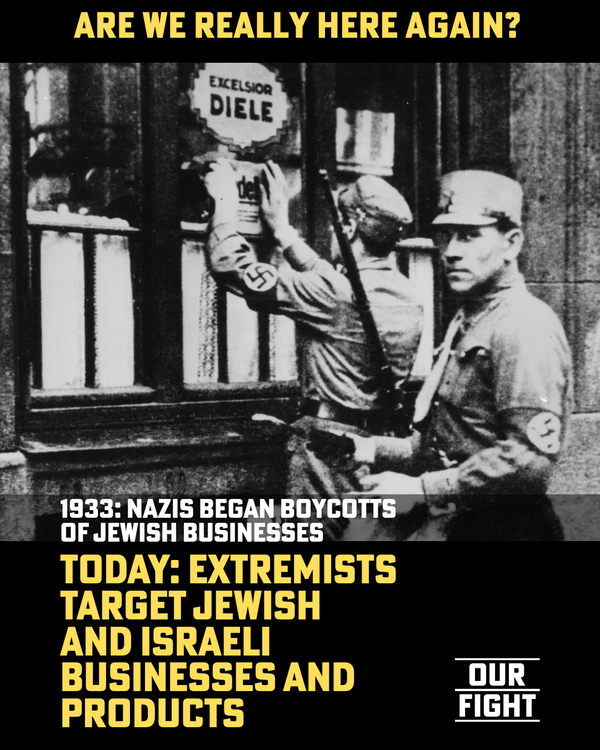
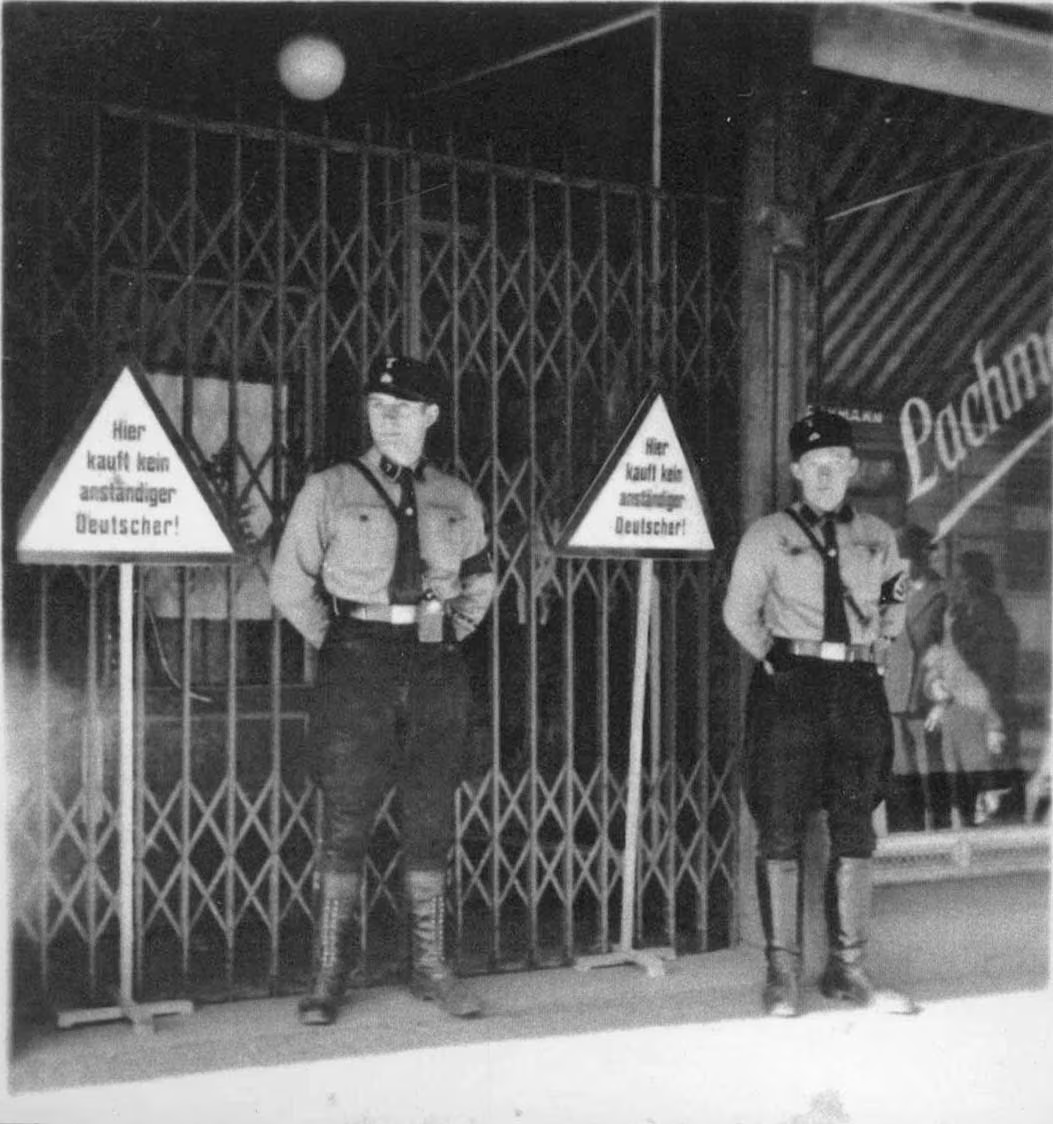
Long before all of these things — some twelve years before the Budapest trains, ten before Operation Reinhard, seven before the ghettoes and five before the November pogroms — the Nazis organised 'Boycott Day'. On April 1st, 1933, brownshirts (members of the Sturmabteilung or SA, the paramilitary wing of the Nazis) stood outside Jewish shops, with banners and placards, intimidating the public to prevent them entering and purchasing products.
And outside Miznon on Friday evening, and multiple times over the last eight weeks, over fifty of our 21st century brownshirts intimidated customers and staff. They chanted slogans whilst people tried to eat. And although the police were there in numbers, they allowed the barracking to take place directly opposite the restaurant, as if harassing and taunting Jews was now a democratic right.
International Holocaust Memorial Day
So as we approach this year's International Holocaust Memorial Day on January 27th — and we see the beast of anti-Semitism becoming increasingly emboldened — it's important to realise that although we may still not be able to fully comprehend how the Holocaust happened, we know that if we allow boycotts of Jewish businesses to take hold, then we are one step closer.
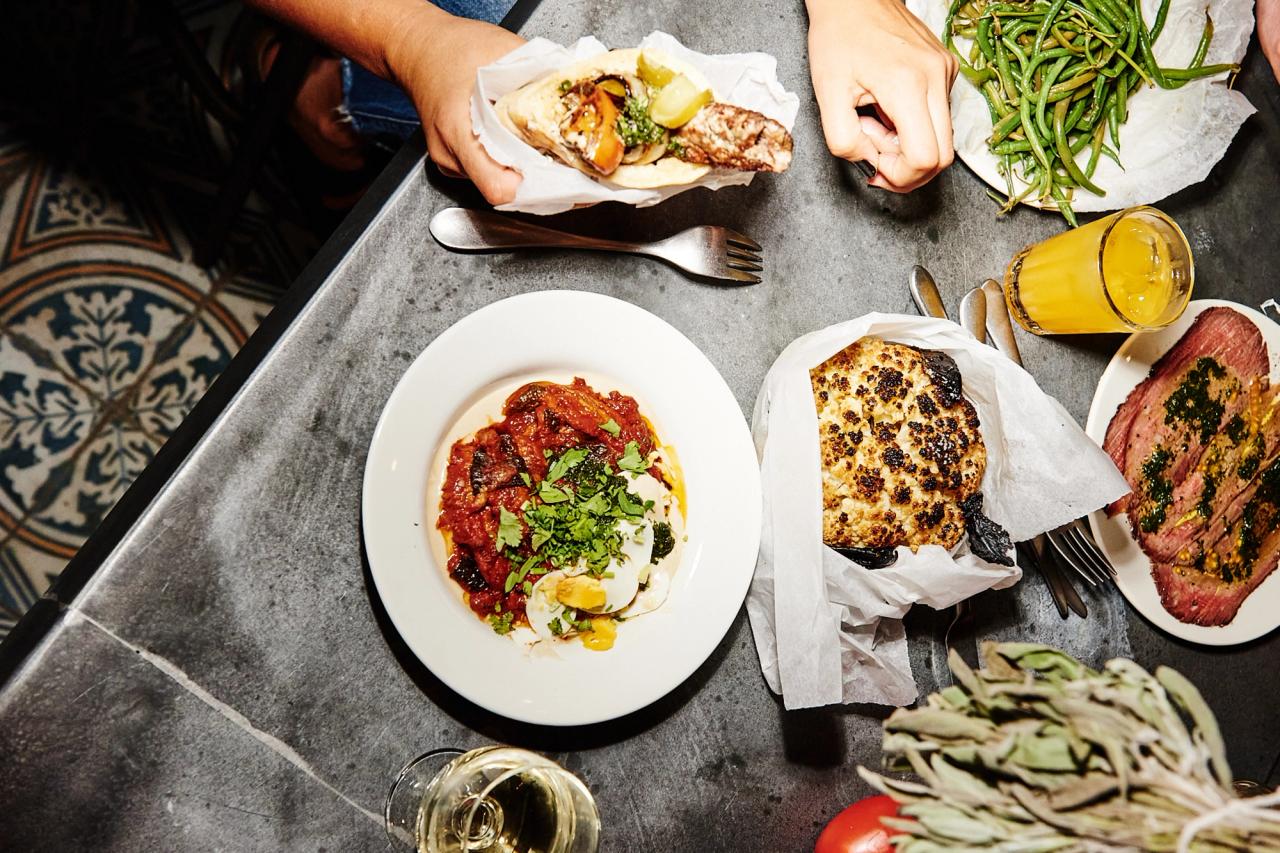
We can all challenge the boycotts — it's even more important for non-Jews — either by standing firm against their intimidation, or by supporting the businesses that are being targeted. Miznon in Notting Hill is a fantastic restaurant, so it's not a difficult place to start.
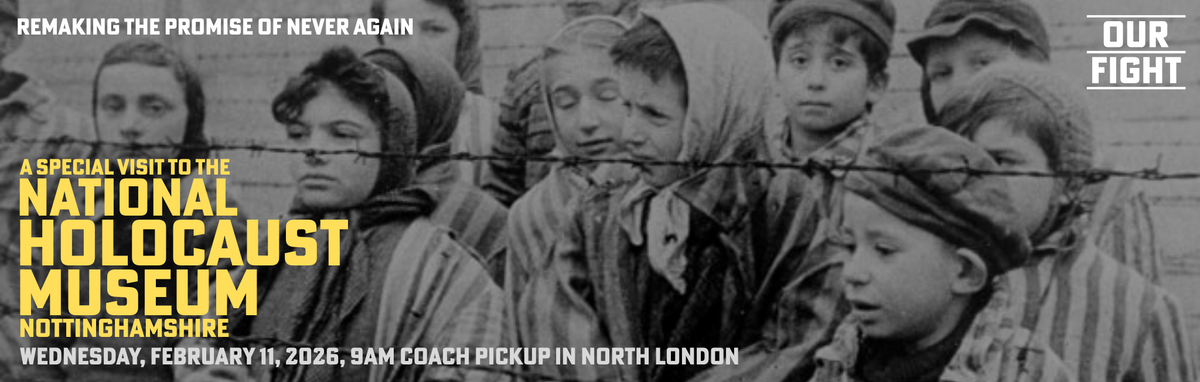
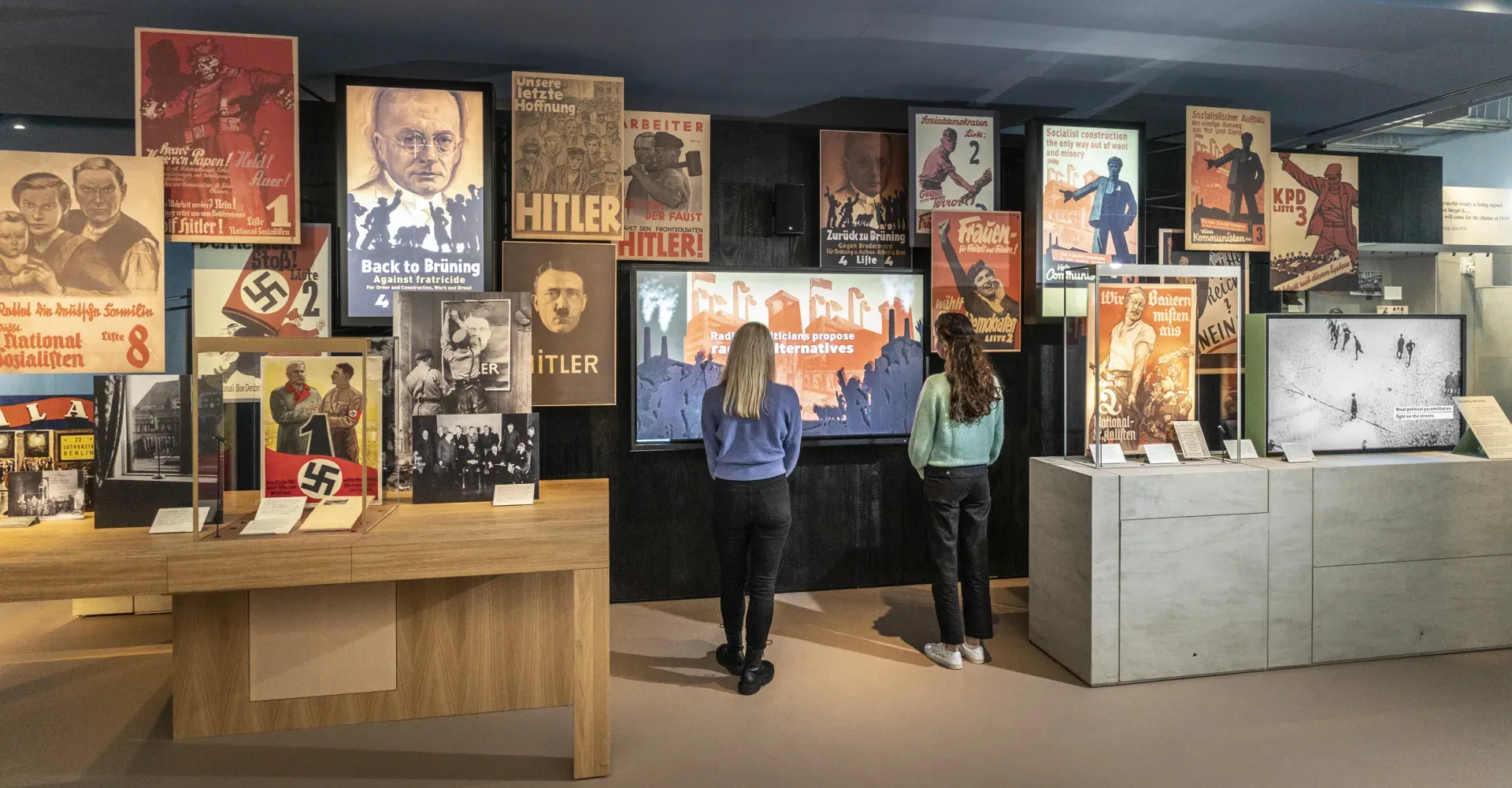
And visit Yad Vashem, or one of the UK-based Holocaust museums — the National Holocaust Museum in Nottingham and the Holocaust Galleries in London's Imperial War Museum; the Holocaust may be an 'outrage to common sense' — but we must be bold enough to keep it in our sights.
Useful Links
 Our Fight